

The best Intercom alternatives for small businesses depend on what the support team does most. Tidio makes sense for an ecommerce team that wants live chat and automation. Help Scout suits a team built around email. Chatwoot gives technical teams an open-source route. Zendesk covers deeper routing and phone support. Conecto uses fixed workspace pricing for teams that want website chat, AI, browser voice, and human handoff together.
Small teams usually start comparing alternatives for three reasons: the base subscription grows with every seat, AI adds another billing unit, or the product has more operational depth than the team needs. A direct Conecto vs Intercom comparison is useful if those are your final two options. This guide starts one step earlier and compares nine different ways to run support.
Key Takeaways
- Tawk.to is the lowest-cost option for human live chat because its core product is free for unlimited agents. Paid add-ons apply per property.
- Conecto and Crisp charge per workspace on their relevant plans. Most other paid options in this list charge per agent or seat.
- AI pricing cannot be compared by the label alone. The vendors bill outcomes, resolutions, sessions, conversations, messages, or metered USD credits.
- Help Scout is the strongest email-first choice, Tidio is built for ecommerce support, and Chatwoot is the open-source choice.
- Intercom still suits teams that need its product depth, app ecosystem, broad channel coverage, and mature Fin workflows.
Intercom alternatives at a glance
The prices below show the cheapest plan that can reasonably cover the stated use case, not always the cheapest plan a vendor sells. A trial is not counted as a permanent free plan. Annual prices are marked because monthly billing can be higher.
| Alternative | Best for | Permanent free plan | Relevant paid starting point | Billing unit | AI billing model | Main tradeoff |
|---|---|---|---|---|---|---|
| Conecto | A complete small-team workspace | Yes, 2 seats | Lite, $25 monthly | Workspace | Metered USD budget | Five people need the $65 Scale plan |
| Crisp | Chat and email in one shared inbox | Yes, 2 seats | Mini, $45 monthly | Workspace | Monthly USD credits | Five people need the $95 Essentials plan |
| Tidio | Ecommerce live chat and AI | Yes, 10 seats | Starter, $24.17 monthly equivalent, annual billing | Plan with 10 seats included | AI conversations on a separate add-on | Human, AI, and Flows usage have separate meters |
| Help Scout | Email-first support | Yes, 5 users | Standard, $25 per user monthly | User | $0.75 per AI resolution | Free plan allows 100 contacts and one Inbox |
| Freshdesk Omni | Lower-priced multi-channel support | No, 14-day trial | Growth, $29 per agent monthly, annual billing | Agent | $49 per 100 sessions after the initial allotment | A session covers one user for 24 hours |
| HubSpot Service Hub | Teams already using HubSpot CRM | Yes, 2 users | Starter, $20 per seat monthly list price | Seat | Credits, but Customer Agent needs Professional or Enterprise | Autonomous AI starts on a much higher plan |
| Chatwoot | Open-source deployment | Yes, cloud and self-hosted options | Startups, $19 per agent monthly, annual billing | Agent | Captain credits | Self-hosting shifts infrastructure work to your team |
| tawk.to | Free live chat with many agents | Yes, unlimited agents | AI Growth, $29 monthly, optional | Property for paid add-ons | Monthly message credits | Free core carries tawk.to branding |
| Zendesk Suite | Mature routing and telephony | No, 14-day trial | Suite Team, $55 per agent monthly, annual billing | Agent | Resolution allowances and tiers | Higher base price and extra usage charges |
What Intercom costs a small team in 2026
Intercom Essential starts at $29 per full seat per month on annual billing. It includes Messenger, a shared inbox, tickets, reports, and a public help center. There is a 14-day trial, but no permanent free plan. Five people cost $145 per month equivalent before Fin outcomes or usage-priced channels. Intercom publishes the plan details.
Fin starts at $0.99 per outcome. Intercom defines that unit more carefully than a simple answered conversation. For support use cases, the documented $0.99 outcomes include a resolution, successful Procedure handoff, or disqualification. Intercom prices a sales Qualification outcome at $9.99. A default escalation after a customer asks for a person is not billed as an outcome, and only one outcome is charged per conversation. Intercom documents the current outcome rules.
A team with 1,000 conversations cannot assume it will buy 1,000 outcomes. The total depends on what Fin handles and how each conversation ends. Standalone Fin can also include a minimum commitment, with 50 outcomes used as a public example. Do not apply that minimum automatically to every Fin deployment inside an Intercom plan. The Fin FAQ explains the standalone commitment.
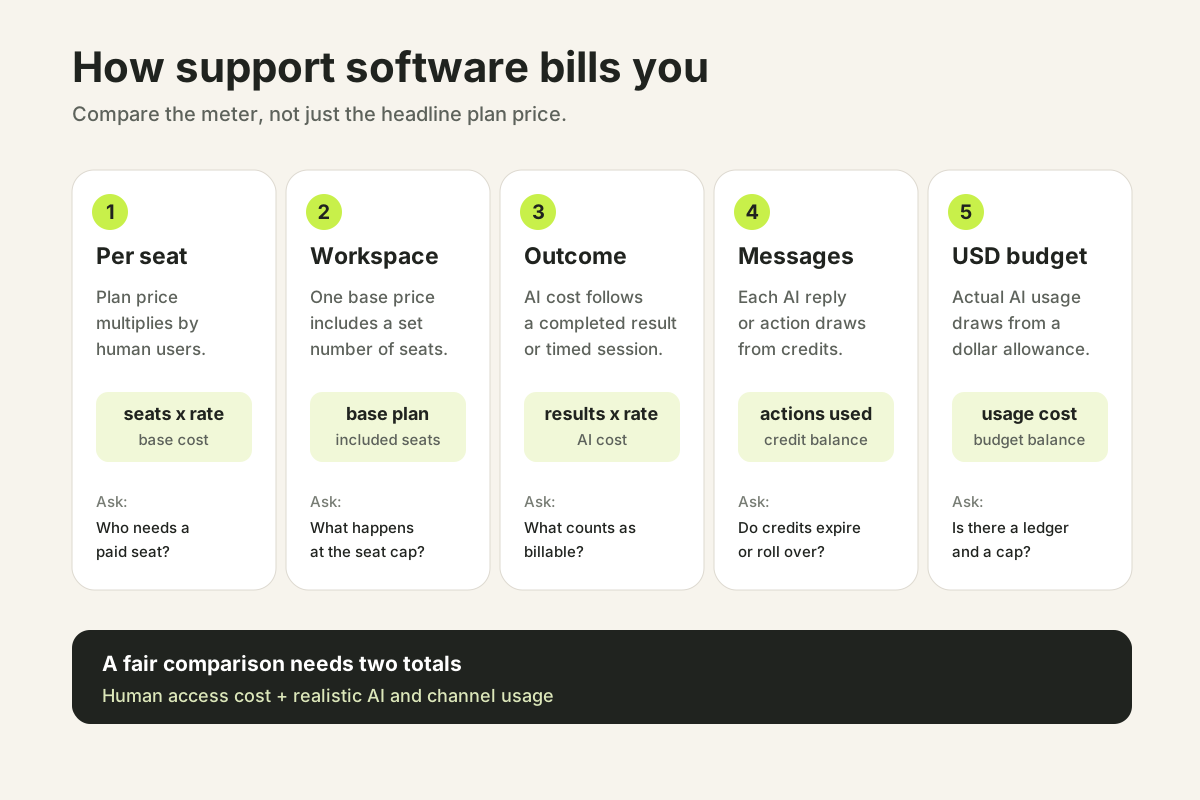 Billing labels are not interchangeable. Estimate each product with the unit it actually charges.
1. Conecto: best complete workspace for a small team
Conecto fits a small team that wants one workspace price, a visible AI budget, website chat, and a direct human path. The free plan covers two seats, one widget, 100 CRM contacts, and unlimited live chat. Lite costs $25 monthly for four seats and $5 in AI credits. Scale costs $65 monthly for 10 seats and $15 in credits. Both are priced per workspace. The Conecto pricing breakdown shows the limits.
AI draws from a USD budget, with top-ups and a per-reply ledger. The AI support agent hands work to a teammate with context. Voice inside the website widget uses the same AI budget as text. It is browser voice, not a phone system. The official product pages describe the boundaries.
Lite stops at four seats, so five people need Scale. Conecto's public pages also do not document a general inbound shared-email channel clearly enough for this comparison. Confirm that channel before moving. Conecto works best when website conversations, transparent AI spend, and shared inbox ownership are the priority.
2. Crisp: best flat-price inbox for chat and email
Crisp suits teams that want website chat and shared email under a workspace price. Its free plan includes two seats, a widget, mobile apps, a shared inbox, and unlimited conversations. Mini costs $45 monthly for four seats, shared email, private notes, triggers, and $5 in Hugo credits. Essentials costs $95 monthly for up to 10 seats, broader channels, a knowledge base, and $25 in credits. Crisp lists the limits.
Hugo uses monthly USD credits that reset, with Pay As You Go available afterward. It can move a conversation to the human inbox when confidence is low or an escalation rule fires. See Crisp's Hugo billing guide and automated inbox guide.
Crisp does not publish a standard fifth-seat price for Mini, so five people should budget for Essentials. Mini also omits the knowledge base and broader AI channel coverage. Our Conecto and Crisp comparison examines the two workspace-priced approaches.
3. Tidio: best Intercom alternative for ecommerce
Tidio gives ecommerce teams a low starting price and 10 human seats. Its free plan includes live chat, ticketing, email management, and 50 billable support conversations per month. Starter costs $24.17 per month equivalent on annual billing and includes 100 billable live conversations or tickets. Tidio's pricing page documents the seat count, conversation limits, and current annual price.
Lyro AI is a separate add-on, starting at $32.50 per month on annual billing for 50 AI conversations. Lyro can transfer work to human agents. The first 50 Lyro conversations are a one-time lifetime allowance, not a fresh monthly allocation.
The low base price needs careful reading because Tidio measures human support conversations, Lyro conversations, and Flows visitors separately. Estimate all three against your own monthly volume before deciding. A five-person team can use Starter without a seat upgrade, but recurring Lyro use increases the total. See the Conecto and Tidio comparison if ecommerce chat is your main buying question.
4. Help Scout: best email-first Intercom alternative
Help Scout is the clearest choice for an email-first team. Its free plan covers five users, one Inbox, one Docs site, and 100 monthly contacts. Standard costs $25 per user per month, allows up to 25 users, and includes two Inboxes. Paid plans document email, live chat, SMS, WhatsApp, Instagram, and Messenger. See the plan guide and pricing page.
AI Answers costs $0.75 per resolution on paid plans. A resolution is a customer chat session completed without human help. A request for more help does not count. Help Scout documents the AI resolution rule.
Five users can stay free if the contact and Inbox limits work. Standard costs $125 monthly for five users, and its cost rises directly with the team.
5. Freshdesk Omni: best lower-priced multi-channel suite
Freshdesk Omni fits teams that need several channels at a lower entry price than a mature suite. Growth costs $29 per agent per month on annual billing or $35 monthly. Email, web chat, WhatsApp, Facebook, Instagram, and other supported channels feed one command center. There is a 14-day trial, not a permanent free Omni plan. Freshworks publishes the plan details.
New customers receive a one-time 500-session Freddy AI allotment. More sessions cost $49 per 100. One session covers one end user for 24 hours. If sessions run out, live conversations can move to agents, while self-service widgets stop. The Freddy session FAQ explains the meter and fallback.
Five Growth agents cost $145 per month equivalent annually or $175 monthly. A session may contain several messages, so it cannot be compared directly with a resolution. Native voice entitlement on Growth was not clear in the official material reviewed. Confirm it if phone support is required.
 A useful handoff carries the customer's question, prior replies, and reason for escalation into the human queue.
6. HubSpot Service Hub: best for teams already using HubSpot
HubSpot Service Hub makes sense when the CRM already holds the customer record. Its free plan supports two users with email, live chat, basic tickets, and a shared inbox. Starter has a $20 per-seat monthly list price. HubSpot's official pages have shown inconsistent annual promotions, so verify the checkout price. HubSpot publishes the current tiers.
Customer Agent needs Professional or Enterprise. Professional costs $90 per seat monthly on annual billing or $100 monthly, includes 3,000 credits, and requires $1,500 onboarding. Customer Agent uses 50 credits per resolved conversation. Another 1,000 credits cost $9 with annual billing. It supports Facebook, WhatsApp, live chat, email, and a calling beta, then reassigns unresolved work. HubSpot documents its channels.
Five Starter seats cost $100 monthly without Customer Agent. Five Professional seats cost $500 on month-to-month billing, or $450 per month equivalent on annual billing, plus onboarding and extra credits. That jump makes sense when the team will use the wider HubSpot system.
7. Chatwoot: best open-source Intercom alternative
Chatwoot gives technical teams control over deployment. Its self-hosted Community Edition has a $0 software license, with infrastructure and operations supplied by the business. The free cloud Hacker plan covers two agents, 500 monthly conversations, live chat, and 30-day retention. Chatwoot's self-hosted pricing separates software from operating responsibility.
Cloud Startups costs $19 per agent monthly on annual billing. It includes all channels, a help center, and 300 monthly Captain credits. Chatwoot lists its cloud plans. One message or action generally uses one credit, and 1,000 extra credits cost $20. A fallback can transfer work to a person when Captain cannot answer or credits run out. Chatwoot explains Captain credits.
Five Startups agents cost $95 per month equivalent. Business costs $39 per agent monthly on annual billing and adds Twilio Voice and WhatsApp Calling, with provider use separate. Community Edition excludes Captain AI. Paid self-hosted plans list Captain AI, but check the current setup requirements before deployment.
8. tawk.to: best free Intercom alternative for live chat
Tawk.to is the cheapest way here to give many human agents a live-chat queue. Its core product is free forever with unlimited agents, chat volume, and sites or widgets. It includes email ticketing, a hosted knowledge base, and CRM. Email is a ticketing system, not a verified synchronized mailbox. Tawk.to lists the core plan.
AI Assist Hobby is free with 100 monthly message credits. Growth costs $29 monthly or $290 yearly with 1,000 credits and configured human escalation. Another 1,000 credits cost $30. Purchased credits roll over, while included credits reset. See the AI Assist plan guide and billing guide.
Five agents can use core for $0 or add Growth for $29 monthly. Free core carries tawk.to branding, and add-ons are priced per property. Browser video, voice, and screen sharing costs $49 monthly or $348 annually per property. It is not PSTN phone support. Tawk.to documents its add-on pricing. Our Conecto and tawk.to comparison covers the wider choice.
9. Zendesk Suite: best for mature support operations
Zendesk Suite suits established teams that need deep routing, messaging, a knowledge base, live chat, and telephony. Suite Team includes those capabilities at $55 per agent monthly on annual billing. Support Team costs $19 per agent per month, billed annually, but focuses on email and ticketing. Zendesk has a 14-day trial and no free plan. Zendesk shows the plan split.
Zendesk moved to automated resolution allowances and tiers in 2026. Its public pages do not give one simple AI overage price. Copilot is a separate $50 per-agent monthly add-on on annual billing. Zendesk documents the resolution tiers and resolution allowances.
Five Suite Team agents cost $275 monthly equivalent before usage and add-ons. That is high for website chat alone, but easier to defend when telephony, mature routing, and controls would require several products. See Conecto vs Zendesk for a direct comparison.
Five-person cost comparison
This table models five human support users using public list prices. It does not force unlike AI units into one total. Taxes, usage-priced channels, infrastructure, payment fees, and optional add-ons are excluded unless stated.
| Product and plan | Five-person base cost | Billing basis | AI treatment in this figure |
|---|---|---|---|
| Intercom Essential | $145 monthly equivalent | $29 per seat, annual billing | Fin outcomes excluded |
| Conecto Scale | $65 monthly | Per workspace | $15 monthly AI credits included |
| Crisp Essentials | $95 monthly | Per workspace | $25 monthly Hugo credits included |
| Tidio Starter | $24.17 monthly equivalent | Annual billing, 10 seats included | Recurring Lyro add-on excluded |
| Help Scout Standard | $125 monthly | $25 per user, monthly billing | AI Answers resolutions excluded |
| Freshdesk Omni Growth | $145 monthly equivalent or $175 monthly | Per agent, annual or monthly billing | One-time 500-session allotment noted, further sessions excluded |
| HubSpot Service Hub Starter | $100 monthly | $20 per seat list price | Customer Agent unavailable on Starter |
| Chatwoot Cloud Startups | $95 monthly equivalent | $19 per agent, annual billing | 300 monthly Captain credits included |
| tawk.to core | $0 | Unlimited human agents | AI Growth optional at $29 monthly |
| Zendesk Suite Team | $275 monthly equivalent | $55 per agent, annual billing | Resolution overages and Copilot excluded |
Use the table as a starting budget. A $24.17 Tidio base plus Lyro cannot be compared directly with a $65 Conecto plan that includes a metered AI allowance. A Freddy session may contain several messages, while an AI resolution requires completion without human help. Use your last 30 to 90 days of support volume to count seats, customer contacts, successful automated completions, escalations, and active channels in each vendor's own unit.
How to choose an Intercom alternative
Start with the workflow that creates most support work. Long feature lists can hide the differences that change the queue and bill.
Choose by primary channel
Pick Help Scout for email, Tidio for ecommerce chat, or tawk.to for free human chat. Crisp combines chat and shared email. Zendesk covers phone support and mature routing.
Choose by billing model and team size
Workspace plans avoid immediate seat multiplication, but tier limits still force jumps. Conecto Lite and Crisp Mini stop at four seats. Per-seat plans suit stable staffing. Model AI usage separately in the vendor's own unit.
Choose by automation and handoff
Document a successful AI result, the behavior when credits run out, and human escalation triggers. Confirm that the person receives the transcript, customer details, prior actions, and escalation reason.
Separate browser voice from phone support
Conecto and tawk.to offer spoken browser interactions. Chatwoot connects Twilio Voice on Business. Zendesk Suite includes telephony. If you need inbound numbers, call routing, recording, and carrier usage, do not treat every voice label as equivalent.
Check migration before signing
List what must move: conversations, contacts, knowledge, macros, rules, reports, integrations, and identity data. Confirm export formats, retention limits, apps, and cutover ownership.
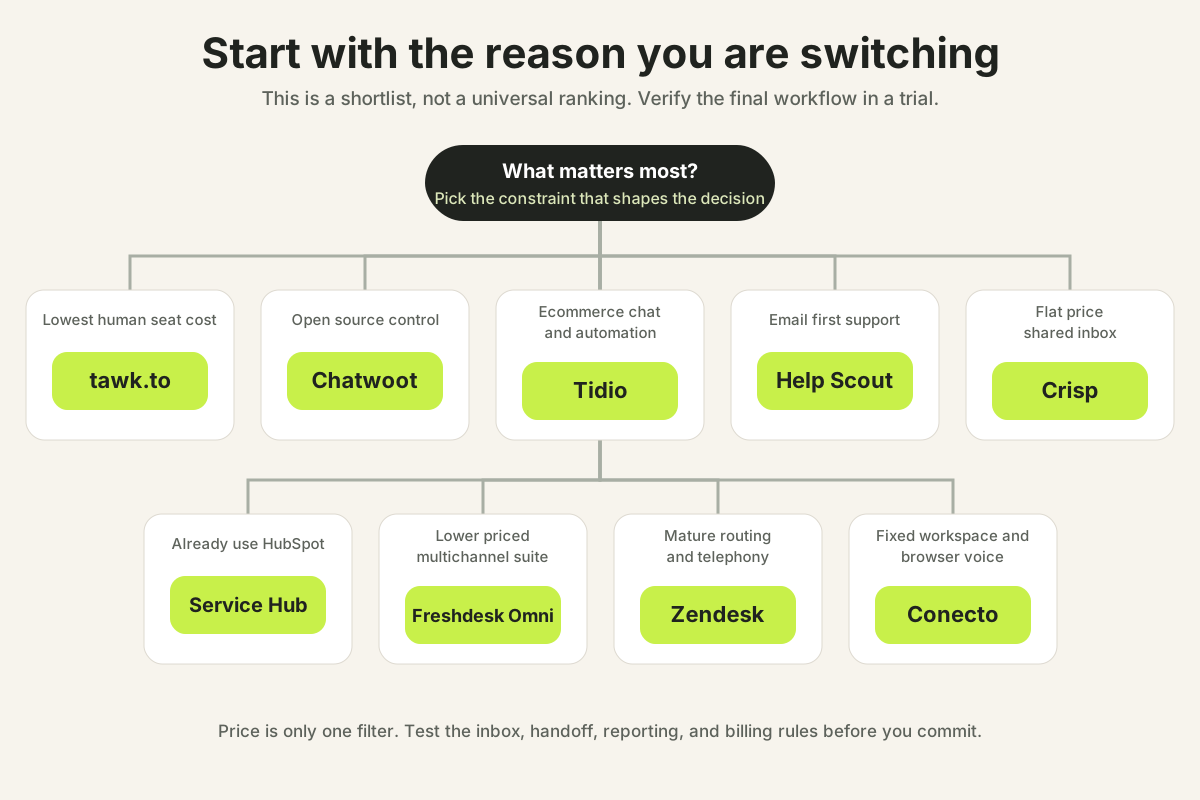 Use the primary support workflow to narrow the shortlist before comparing secondary features.
When Intercom still makes sense
Intercom remains a sensible choice for teams that value depth more than the lowest or most predictable base price. Fin has a mature outcome model with documented distinctions between resolutions, Procedure handoffs, disqualifications, and default human escalation. The platform also combines broad channel coverage, product messaging, a large app ecosystem, reports, tickets, a public help center, and controls designed for more complex operations.
That depth is useful when support is tied closely to product-led growth, when the team already has Intercom data and workflows, or when switching would remove capabilities that matter. A startup with two support agents may pay for more system than it needs. A larger software company using Messenger, Fin, tickets, help content, routing, and integrations may find that the total operating fit matters more than the seat price.
Do not leave because the company now emphasizes the Fin name. Leave only when another product covers the channels, handoff behavior, reporting, integrations, and migration needs at a better total cost for your team.
Methodology and disclosure
We compared the nine products using public pricing pages and official help documentation. Prices were checked on August 17, 2026, shown in USD before tax, and labeled when annual billing is required. Trials were kept separate from permanent free plans.
The comparison considered the cheapest plan that could reasonably replace the relevant part of Intercom, included seats, pricing unit, documented channels, customer-facing AI charges, handoff behavior, voice type, and the main limitation for a small team. We kept each vendor's AI unit intact because outcomes, resolutions, sessions, conversations, messages, and USD credits measure different things.
Our conclusions come from documentation without hands-on testing. Conecto publishes the article and appears in the list. No vendor paid for placement, and no affiliate ranking determined the order. Public prices and packaging can change, so verify the linked vendor pages before buying.
Practical questions about Intercom alternatives
What is the cheapest Intercom alternative for a small team?
Tawk.to is cheapest for human live chat because core is free for unlimited agents. Chatwoot Community Edition has a $0 license, but the business supplies infrastructure and operations. Email, AI, reporting, and phone needs change the answer.
Is there a free alternative to Intercom?
Yes. Seven products in this list have permanent free options with different limits. Tawk.to allows unlimited human agents. Help Scout allows five users but only 100 contacts, one Inbox, and one Docs site. Compare channel and capacity limits.
What is the best open-source Intercom alternative?
Chatwoot is the open-source choice. Community Edition has no software license charge, while cloud plans offer a managed path. Community Edition excludes Captain AI, so compare the paid self-hosted tiers and their setup requirements if AI is part of the plan.
Which Intercom alternative is best for ecommerce?
Tidio is the strongest ecommerce-oriented option here. Free and Starter include 10 human seats, with Lyro AI sold separately. Human conversations, Lyro conversations, and Flows visitors use different allowances.
Which alternative is closest to Intercom?
Zendesk Suite is closest for routing, telephony, messaging, and knowledge. Freshdesk Omni is a lower-priced multi-channel option. Conecto fits smaller teams prioritizing website chat, AI, browser voice, human handoff, and workspace pricing.
Should a team leave Intercom because the company is now called Fin?
No. Compare the current plan, Fin outcome charges, channels, integrations, handoff rules, migration cost, and daily work. Switch only if another product covers those requirements with a better cost and operating model.
Make the shortlist from your real support queue
Choose two products based on the channel that creates most of your work, then price them with your actual seat count and the vendor's real AI billing unit. Reject any option that cannot preserve context during human handoff or cover a required channel. If website chat, a visible AI budget, and a fixed workspace price match your shortlist, start with Conecto's free plan and test the workflow with your own support questions before committing.